

The Energy Shift of Year-End
The calendars fill, the to-do lists double, and suddenly we’re juggling travel plans, work deadlines, family events, and the hundred tiny tasks that come with the season.
Prefer to watch instead of read?
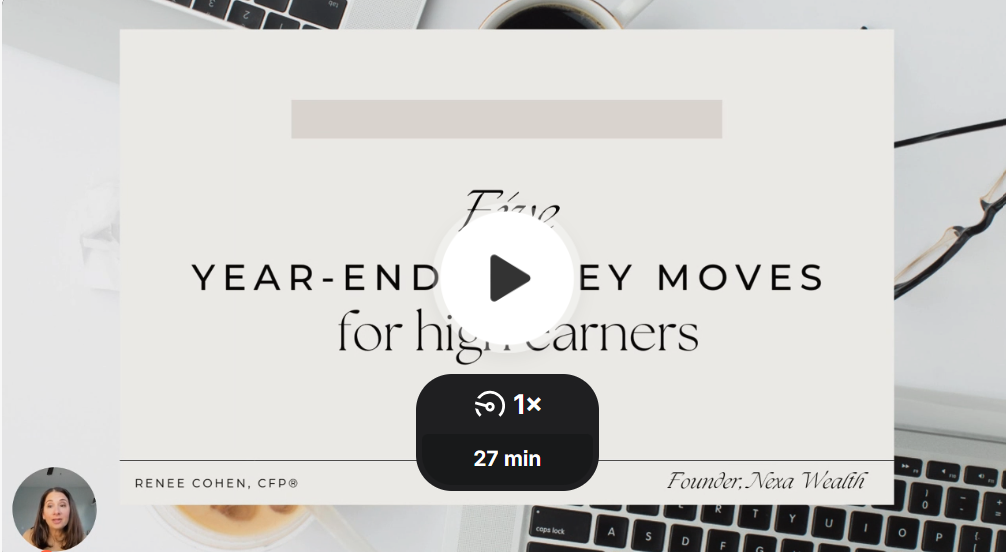
I recorded a 27-minute breakdown (18 minutes on 1.5x) walking you through the biggest money moves to make before December 31.
1. Max Out What Still Counts for 2025
- $23,500 annual employee contribution
- $7,500 catch-up if you’re 50+
- Total possible with employer contributions: up to $69,000
- Combine employee + employer contributions
- Total limit: up to $69,000 (or $76,500 if you’re 50+)
- Great for years with higher profit — you can still set this up before year-end if needed
- Employer-only contributions
- Up to 25% of compensation , capped at $69,000
- A solid option if you want a retirement option without any potential administrative costs with the Solo 401k
- $7,000 annual contribution
- $1,000 catch-up if you're 50+
- (Income limits apply for deductibility and Roth eligibility.)
- $4,300 for individuals
- $8,550 for families
- $1,000 catch-up if you're 55+
- lower your taxable income,
- increase tax-advantaged growth, and
- help you start the new year already ahead.
Adjust your final paycheck contributions or direct part of your bonus toward retirement. It’s one of the easiest year-end tax wins.
2. Review your (taxable) investment gains + losses:
- You can use losses to offset unlimited investment gains , and
- You can use up to $3,000 of leftover losses to reduce your regular taxable income.
3. Double-check your tax withholdings
- RSU vesting or stock sales
- A big bonus
- A promotion or raise
- A new business
- Marriage / divorce
- Higher childcare or medical expenses
This is something I run for almost every client in November.
4. Make Your Money Work Twice Through Giving
- Donate appreciated stock
- “Bundle” donations this year to exceed the standard deduction
- Make gifts that align with your values and tax picture
- Donate appreciated stock now (and take the full tax deduction this year)
- Invest the funds inside the DAF
- Decide later which charities you want to support. Even years from now
5. Get Real About Holiday Cash Flow
One minute you’re buying a gift for a family member and the next thing you know, you’ve said yes to three holiday parties, matching family pajamas, and a cart full of things you didn’t even know you needed.
- Set a holiday spending cap (and stick to it-ish)
- Keep meaningful giving separate from the impulse buys
- Assign your bonus a purpose before it disappears into December chaos
6. If you’re a business owner, close your books with intention
Before December 31, take a beat to look at:
- Estimated taxes(so April doesn’t surprise you)
- Your S-Corp salary — do you need a quick true-up before year-end?
- Any equipment or business purchases you were planning anyway
- Your retirement contributions(Solo 401k, SEP IRA, or SIMPLE IRA)
- Whether a year-end distribution actually makes sense for your cash flow + taxes
These decisions hit both sides of your life — your taxes and your personal financial plan — so doing a quick sweep now can make January feel a whole lot calmer.
Final Thought
You just need to wrap up the year intentionally.
If you want a quick walkthrough of the exact year-end moves I look at with clients, I put together a 15-minute video that breaks everything down in a simple, practical way. It’ll help you make the smartest decisions before 12/31.
You can watch it here.
Q: What’s the most important year-end tax move for high earners?
Making sure your retirement accounts and withholdings are actually maxed and aligned with your income. These two alone prevent the biggest April surprises.
Q: Should I tax-loss harvest before December 31?
If you have investments that are down, harvesting losses can offset gains and reduce your taxable income by up to $3,000. It’s a simple move that many people overlook.
Q: How do I know if I should do a Roth conversion?
If your income is lower this year, you expect future tax rates to increase, or your pre-tax accounts are heavily weighted, a partial conversion may make sense. It’s worth running the numbers.
Q: What should business owners look at before year-end?
Estimated taxes, S-Corp salary adjustments, retirement contributions (Solo 401k, SEP IRA), equipment purchases you were already planning, and whether a distribution makes sense.
About the Author
Renee Cohen is a financial planner and founder of Nexa Wealth, where she helps women turn strong income into smart strategy. Her approach blends practical planning with real-life balance, helping clients align their money with what matters most so their financial plans feel as good as they look on paper.
Connect with Renee:
Ask me anything
Work with Nexa Wealth